

It’s one of those moody London winters. I am editing my film In Passing and chasing freelance jobs. Most of my time is spent working, reading, going to the cinema, or meeting friends. But I notice that I don’t know enough film people in London. Whenever I need to share a rough cut to get feedback, I send it to the film people I know in Turkey.
It’s my fourth year in London. It’s been tough to survive through Covid, lockdowns, migration, getting hold of a new language, meeting new people… and I am not extroverted enough to make new friends easily. I go to festivals, film events, exhibitions and workshops, but it takes time for me to build the confidence to approach people. So I know what is missing in my life. But how do I find it? No matter how many events I chase, I will still be the same communicator who takes time to get close to people. But maybe I can start something of my own, so that they come to me. I would feel more confident approaching people if they were already there for an event I was organising. And I do have the experience and creativity to design and run an art event. I just need to find something that London needs, so that it fills a genuine need rather than getting lost in the events pool of London.
Then I start thinking about the events that excite me the most. Open mics, improvs, people representing their own voices, discovering talented artists within reachable distance, alternative film communities without fancy mainstream venues or big promotion, where you can actually meet the artists, organisers, audiences and talk. So it should be small, not huge. And it should be what I need the most these days: film people to discuss each other’s projects, to support and inspire each other. Then I start thinking about the work-in-progress labs and workshops at the big festivals, which every filmmaker applies to. I had been to Talents Sarajevo before, in the Directors’ Summit, and it was genuinely a good experience. I spent time with other filmmakers and felt like part of a community. So this is the key: people need to feel they are part of a community. But the existing platforms are competitive and rejection rates are high, which also puts an existential weight on artists’ shoulders.
And then it suddenly comes to me. That’s it! I need to mix these two things together: the productivity of the work-in-progress workshop in the friendly, accessible setting of an open-mic night. An open projection event for filmmakers, where they can bring their works in progress, show them to a room full of other film people and film lovers, get feedback to improve the project, and do some soft networking. This is it. I’ve found the idea. Now I need to outline it, write a text, and work out how to start.
“An open projection night for filmmakers, video artists, and anyone in between.”
And I had to find a catchy name that would also signal that this was not a usual screening. It’s like an open mic, but for films. I asked AI for some help, told it what kind of name I was looking for, and it told me I’d already given the answer within my question:
“Why don’t you just call it simply This Is Not A Screening! then?”
That was how I decided on the name.
And I start telling people about the idea to see their reactions. Everyone I tell gets really excited. But I am still not confident enough to start it on my own. I feel like I need a partner in crime. I start thinking of people I know, and one name stands out as the best option: Shaun, whom I met through a film club I ran with a friend years ago. I remember his gentle, patient energy during the discussions after we watched the films. I send him a message, briefly tell him the idea, and ask whether he’d be interested in co-hosting the events. And he says yes! We meet to work out the details and set a date to start.
How it works
Submissions. We don’t curate submissions. Slots are first-come, first-served. Work-in-progress only — no finished films. We’re here to be part of your process.
Audience. You don’t need to be a filmmaker to join us. If you love film and fancy being part of the discussion, just book a ticket.
Line-up. Each artist has 15 to 30 minutes, depending on the number of submissions and the needs of the works. Whether it’s a rough cut, a piece of raw footage, or any kind of work in progress, we want contributors to share, and we encourage open, interactive conversation. After the viewing, the room and the floor are open. For artists, it’s a chance to share your work and see how it resonates. For audiences, it’s a chance to engage with — and maybe learn from — the creative process.
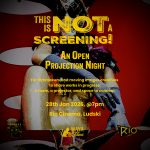
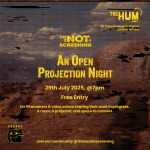
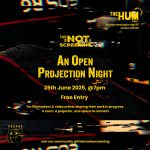
I talk to a friend who runs a café with a basement floor for events. I tell him about the project, and because it’s non-profit he lets me hire the basement for free. Shaun designs the poster, I open an Instagram account and start promoting. We’re anxious, because we don’t know whether people will take it seriously and submit. A few people buy audience tickets, but no artists book a slot yet. We start thinking we might have to show our own work, worst-case scenario. But then magic happens. People start applying, and we have four artists to present.

That encourages us to organise the second one. I keep the Instagram active by posting before and after each event. And then a trustee of the Rio Cinema in Dalston approaches me on Instagram and says:
It’s a cool event — are you looking for a venue?
And I say yes!
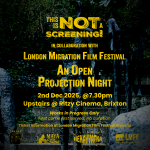
She introduces me to the Rio Cinema, and that amazing cinema becomes our main venue. And as of today, we’ve organised seven events, including a collaboration with London Migration Film Festival on a special theme ‘migration x movement’. We are now a growing community, and informal friendships form through our classic post-event pints at the pub after every event.

Our roles evolved naturally over the events. I run the artist comms, the website, Instagram, venue comms, the tech, hosting, and preparing the video trailers. Shaun designs the posters and co-facilitates the nights.

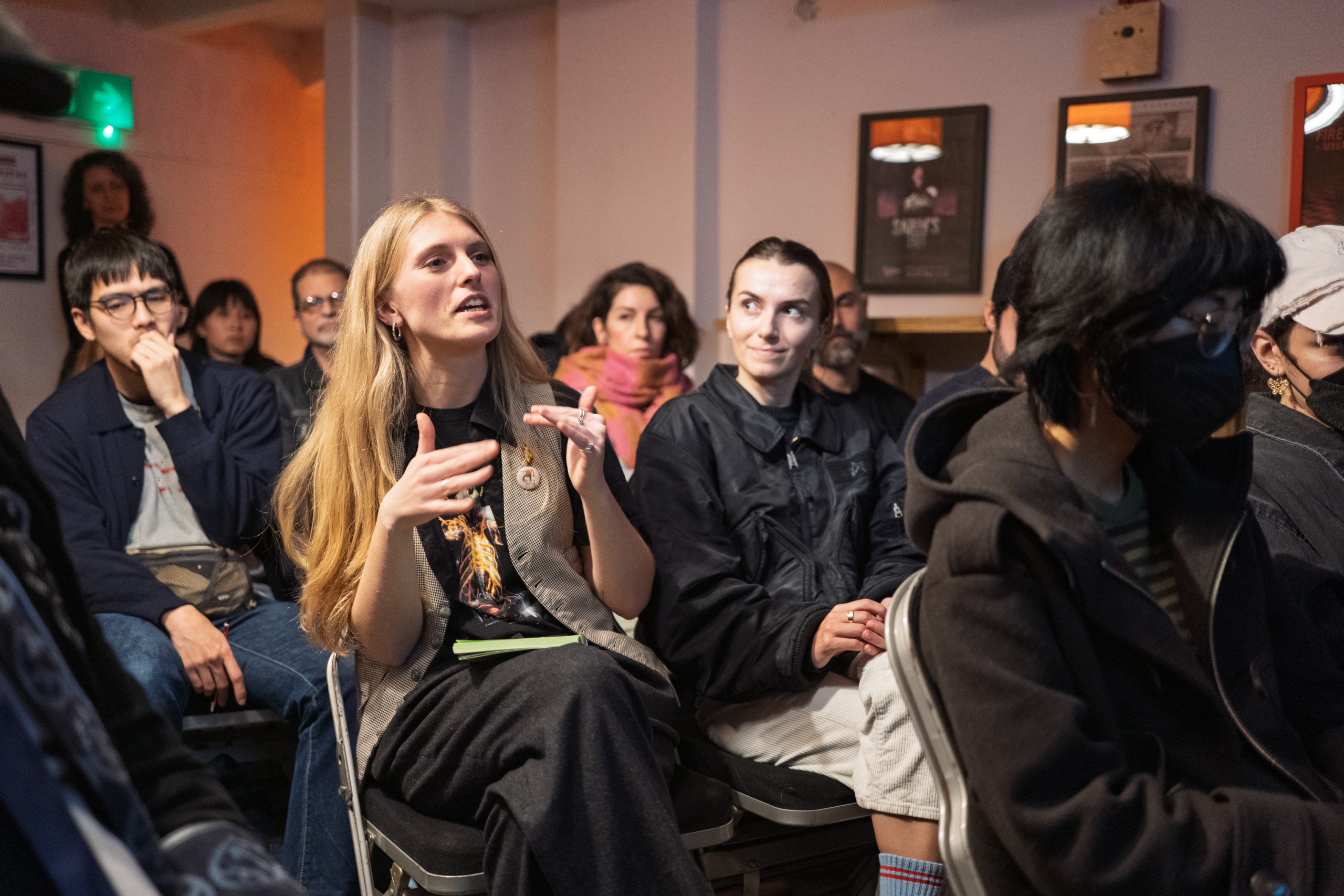
I was lucky that at one of the events we had Chika Hasebe, my ex-flatmate and a creative writer. She attended many of the events, and at one of them she interviewed the participants and the audience.
“It can be really daunting to share your work. There’s no hierarchy here. I think that’s so special.” — Audience member and first-time presenter
“I wanted to take myself out of the vacuum of the solitary experience of editing and see how people connected with it. It’s very unique in the London climate of filmmaking — really embracing the imperfections of films people are working on.” — Filmmaker and first-time presenter
“It’s very easy to feel very isolated and alone when you’re working on stuff. Evenings like this are really nice because you see that your struggle is shared with everyone else and that you’re not alone.” — Return audience member
“In a small room like this instead of a big venue, it feels more intimate and immersive.” — Return audience member
The project’s outcomes: a growing community, a successful external collaboration, consistent return attendance, and the testimonials from participants confirms that this need is real and widely felt.
From the outset, TINAS has attracted a genuinely diverse community of artists and audiences, not as a programmatic target, but as a natural result of its open, non-hierarchical format. The artists who have presented work span a wide range of career stages, disciplines, nationalities, and backgrounds: university lecturers and recent graduates, self-taught filmmakers and MFA holders, practitioners working across film, performance, architecture, ecology, spoken word, and music. Ages have ranged from 23 to 65, with all genders represented.
The work has been just as varied, from media activism documenting ecology movements to experimental performance poetry to films exploring corporate culture, immigrant identity, gender, mythology, and climate justice. Presenting artists have included alumni of Central Saint Martins, the Royal College of Art, the Slade School of Fine Art, and Goldsmiths, alongside entirely self-taught practitioners.
This diversity reflects something specific about the TINAS format. Because there is no curation, no jury, and no requirement for polish or completion, the event is genuinely accessible to filmmakers who may not yet have the credits, the networks, or the finished work to reach more established platforms.
And last but not least, the video trailers I make for the event have become a project in their own right, focused on upcycling old material instead of filming something new purely for promotion. I rework and recontextualise what already exists in my archives from past film projects, giving it new life and cultural value.